
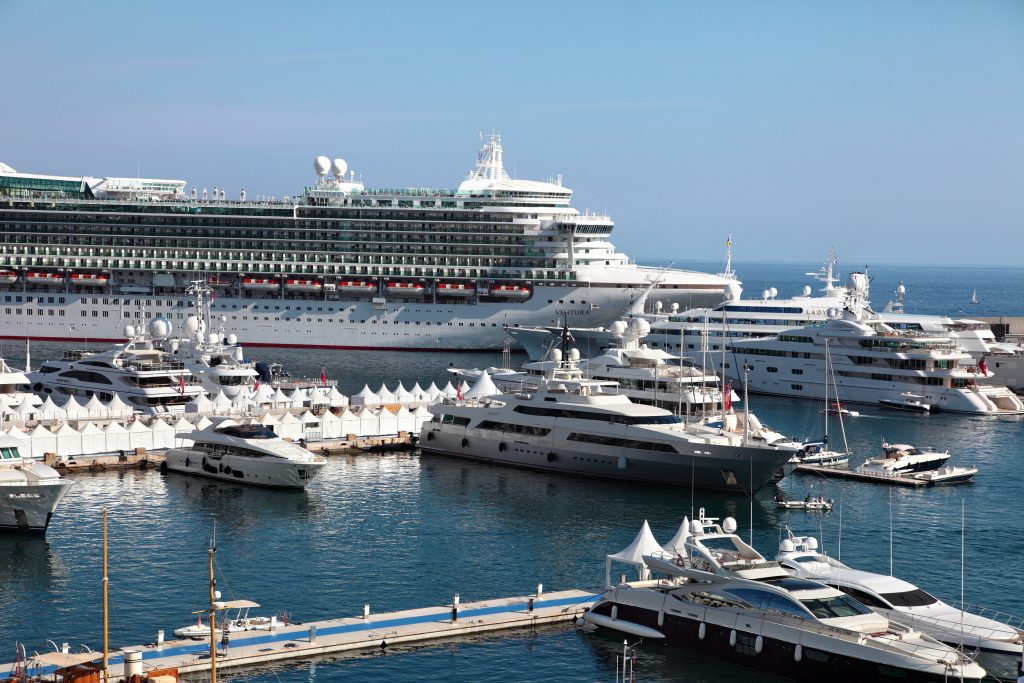
The global cruise industry is entering a new expansion cycle—and Latin America is emerging as one of its most strategic frontiers.
According to Cruise Lines International Association (CLIA), the sector is projected to reach 37.7 million passengers globally in 2025, surpassing pre-pandemic levels. The industry now generates over $168 billion in global economic impact and supports more than 1.6 million jobs worldwide.
Within this context, Latin America is transitioning from a peripheral route to a growth market shaped by infrastructure investment, fleet redeployment, and increasing demand for diversified itineraries.
Infrastructure as strategy: the new port race in Latin America
Across the region, governments and private operators are accelerating investments in cruise terminals and port modernization. While Latin America represents less than 6% of the global cruise market, it is projected to grow at over 10% annually through 2033.
Ports are no longer competing to be included in itineraries—they are competing to become strategic nodes within them.
Fleet expansion is forcing geographic diversification
Global cruise capacity continues to expand, with over 320 ships in operation and a strong pipeline of new vessels. This forces cruise lines to optimize deployment beyond saturated regions.
Latin America benefits from untapped destinations, proximity to North America, and growing regional demand.
From port calls to economic ecosystems
Ports are evolving into revenue multipliers, investment platforms, and brand gateways. Cruise passengers spend approximately $700–$800 per port call, generating immediate economic impact.
Cruise tourism also acts as a customer acquisition channel, with many visitors returning for longer stays.
Reputation as infrastructure: the invisible layer shaping demand
Beyond physical infrastructure, reputation is a critical factor shaping competitiveness. Safety, sustainability, and perception influence demand and itinerary decisions.
Reputation functions as soft infrastructure: reducing risk, strengthening demand, and influencing long-term positioning.
The strategic window for Latin America
With global demand approaching 40 million passengers by the end of the decade, Latin America has a strategic opportunity to position itself as a key player.
Success will depend on integrated strategies aligning infrastructure, investment, and reputation management.
Bottom line
The cruise industry is no longer just a travel segment—it is a global investment, infrastructure, and reputation-driven system.
Latin America is becoming strategic within that system.